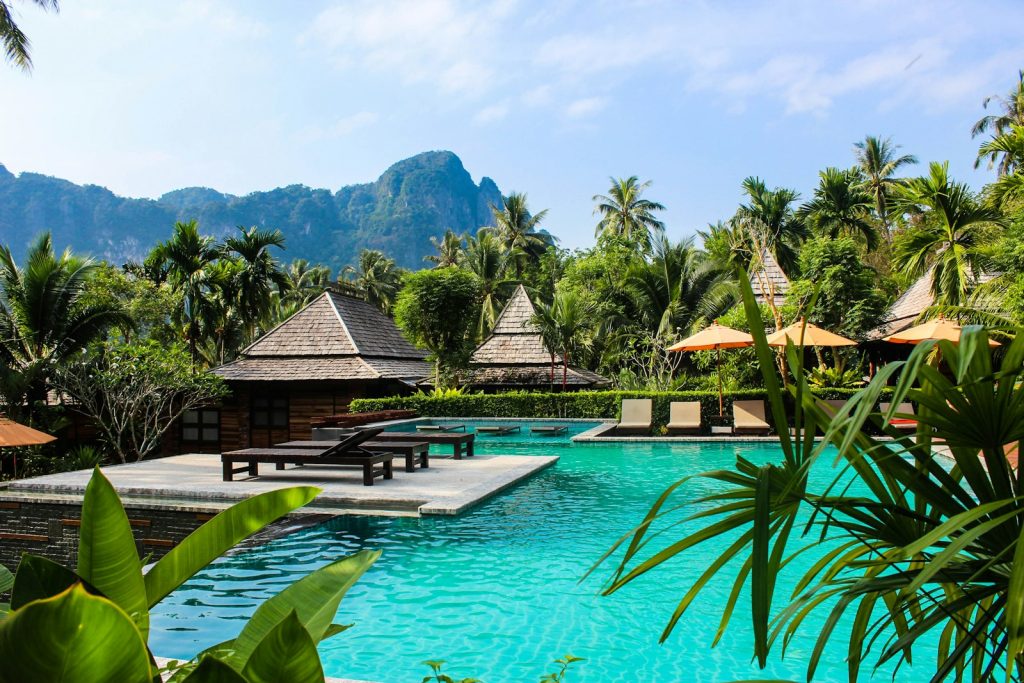
Wellness tourism Sanur Bali refers to people who travel to Sanur specifically for evidence-based wellness, preventive care and rehabilitation, not just spa treatments. In the Sanur Health Special Economic Zone (SEZ), wellness is being built as a formal “second pillar” alongside hospital care, focused on longer stays, healthy ageing and medical wellness rather than short resort breaks.
What “wellness” means inside the Sanur Health SEZ
The Sanur Health SEZ (Kawasan Ekonomi Khusus Kesehatan Sanur) is a state-backed health and wellness precinct in South Denpasar, anchored around the former Grand Inna Bali Beach complex. Regulation is explicit that the zone is not just about surgery or acute hospital work; its legal framework includes:
– medical services (pelayanan medis),
– supporting health services (penunjang kesehatan),
– and “pengembangan herbal dan etnomedisin” (herbal and ethnomedicine development),
– plus “wellness tourism” and long-stay health programs.
Key references (as of June 2026):
– Government Regulation (PP) No. 41/2021 – sets the SEZ framework.
– Presidential Regulation (Perpres) No. 42/2023 – formalises KEK Sanur as a Health SEZ and lists lines of business.
– KEK Sanur National Council approvals and subsequent BKPM/OSS licensing for individual facilities.
In plain language: the Sanur SEZ is designed to combine:
– a quaternary-level Bali International Hospital (BIH),
– supporting hotels and residences,
– and a cluster of wellness, rehabilitation, longevity and ethnomedicine services.
This page focuses on that second cluster: wellness tourism Bali Sanur can deliver now (operating) and what is still in the pipeline (announced or under construction).
Not medical advice: This page is informational and sourced from regulations, operator statements and site visits. It does not replace consultation with qualified medical professionals.
Big picture: how wellness fits around Bali International Hospital
From a patient-pathway perspective, Bali International Hospital is the clinical anchor. Around it, the SEZ is planned to support three main flows:
1. Prevention & early detection
Health checks, risk screening, lifestyle medicine, and coaching.
2. Post-acute recovery and rehabilitation
Physio, cardiac and neuro rehab, longer convalescence stays in a less “hospital” environment.
3. Longevity and healthy ageing
Programs for seniors and early retirees combining medical supervision, movement, nutrition, and social life, some linked to retirement or long-stay accommodation.
The SEZ masterplan documents talk about a “medical wellness” and “long stay” model: guests might fly in for cardiac surgery at BIH, then transfer to a hotel-based rehab program; or mid‑career professionals could book a week‑long executive check‑up plus targeted lifestyle interventions.
However, mid‑2026 reality is more modest than the marketing:
– Bali International Hospital is operational but still scaling up service lines.
– Parts of the hotel and MICE renovation are open; others are phased.
– Dedicated large-scale “longevity centres” and a full ethnomedical botanical garden are announced and partially permitted, but not yet open to the public.
This distinction between operating and planned matters for anyone considering wellness tourism Sanur Bali in 2025–2026.
Operating vs planned: wellness and longevity services in Sanur SEZ
The table below summarises the main wellness, longevity and preventive-care elements tied to the Sanur Health SEZ as of June 2026.
| Offering | Type | Status (June 2026) | Notes |
|---|---|---|---|
| Bali International Hospital preventive & executive check‑ups | Medical wellness / screening | Operating | Packages for general health checks; scope expanding as departments open. |
| Physiotherapy & basic rehabilitation at BIH | Rehab | Operating (limited) | Core physio and post‑surgical rehab; complex long‑term programs still developing. |
| On‑site hotel stays linked to medical visits | Recovery / medical tourism support | Partially operating | Some renovated hotel inventory is open; dedicated “med‑hotel” product in roll‑out. |
| General spa & fitness facilities within SEZ hotels | Wellness / fitness | Operating | Standard hotel gyms, pools, massage; not always clinically integrated. |
| Integrated medical wellness centre (SEZ masterplan) | Longevity / lifestyle medicine | Announced | Planned site for doctor‑supervised wellness; not yet open. |
| Ethnomedical botanical garden & herbal research hub | Ethnomedicine / R&D / visitor education | Announced / early works | Included in official concept documents; public visitor access timing uncertain. |
| Structured long‑stay “healthy ageing” programs | Longevity / geriatric wellness | In design | Aligned with senior living and retirement concepts; not yet standardised. |
Facilities and operators outside the legal SEZ boundary in wider Sanur – including day spas, yoga studios and conventional Sanur wellness retreat villas – remain important for visitor experience but are not part of the KEK Sanur regulatory package.
Preventive medicine and medical wellness: what you can do today
The most concrete “medical wellness Sanur” product available now is preventive screening attached to Bali International Hospital, plus basic rehab and supportive hotel stays.
1. Health checks and executive screening
As of mid‑2026, BIH offers structured medical check‑ups similar to those in major Jakarta and Singapore hospitals. Scope typically includes:
– basic to comprehensive blood work,
– cardiovascular assessment,
– age‑appropriate cancer screening,
– and add‑ons such as imaging or hormonal panels, depending on risk factors.
Key points:
– Target users: Indonesians and international visitors seeking better‑value check‑ups than Singapore while staying onshore.
– Stay pattern: Often 1–3 days based in a nearby or on‑site hotel, with tests in the morning and doctor consultations later the same day or the next.
Pricing (last verified June 2026 from public ranges across comparable Indonesian hospitals and on‑ground operator guidance):
– Basic adult check‑ups in Bali typically run around IDR 3–5 million per person.
– More comprehensive executive packages cluster in the IDR 8–20 million range, depending on imaging and specialist consultations.
– BIH’s exact packages are updated periodically; expect similar bands, not the rock‑bottom discount segment.
For serious buyers, it is reasonable to ask BIH for:
– a written package inclusions list,
– expected time-in-hospital per test,
– and English‑language results turnaround.
2. Lifestyle risk management and counselling
Full‑scale “longevity medicine” – multi‑omics profiling, experimental protocols – is not yet a mainstream SEZ offering. However, more grounded services are emerging:
– cardiometabolic risk counselling alongside heart and diabetes clinics,
– dietitian input for weight, lipid and diabetes control,
– mental health consultations around stress, sleep and burnout.
The value‑add for wellness tourism Bali Sanur is the ability to combine these with:
– a controlled food environment (set meals at hotel or hospital),
– supervised movement (physio‑guided exercise),
– and a lower‑intensity environment than busy metropolitan hospitals.
3. Integrating hotel amenities with medical oversight
One design feature of KEK Sanur is physical proximity: the hospital is within a resort complex, so guests can move between:
– their room (or serviced suite),
– diagnostic and treatment facilities,
– spa, pool or gentle activity areas.
At time of writing:
– Several hundred renovated rooms in the former Bali Beach complex are available as standard hotel inventory.
– A carved‑out “health traveller” product – extra nursing checks, in‑room medical equipment, adapted bathrooms – is being rolled out in phases, focused on post‑procedure guests.
If you are planning a combined wellness and medical stay, you should:
– confirm whether the room type is medically adapted, if you have mobility or cardiac limitations,
– ask what on‑call arrangements exist overnight,
– and clarify which services are billed as hotel extras vs clinical charges.
For tailored itineraries (linking medical, wellness and tourism days), you can plan your trip with our team; coordination by email or WhatsApp is often easier than assembling it alone.
Rehabilitation, recovery and “light medical” stays
Sanur’s existing brand – flat terrain, beach promenade, quieter pace – already made it a de facto recovery district for decades. KEK Sanur formalises this by:
– allowing extended medical stays under favourable visa and customs regimes,
– building rehab capacity adjacent to acute care,
– and encouraging hotels to adapt for longer convalescence.
1. Physiotherapy and functional recovery
As of June 2026, BIH runs core physiotherapy services targeting:
– post‑orthopaedic surgery recovery (hips, knees, spine),
– sports‑related rehab,
– stroke and neuro‑rehab (early phases),
– and general mobility or pain issues.
Program structure is still evolving, but a typical pathway might include:
– an initial assessment with a physiatrist or orthopaedic specialist,
– 3–5 physiotherapy sessions per week,
– home exercises or pool work prescribed as homework,
– re‑assessment every 2–4 weeks.
Some sessions can be done as an outpatient from a nearby hotel; more complex cases may stay in a hospital room.
2. Cardiac and pulmonary rehab (emerging)
Given the investment focus on cardiology at BIH, cardiac rehabilitation is a logical build‑out. By mid‑2026, elements are in place:
– in‑hospital early mobilisation after cardiac procedures,
– monitored exercise in controlled settings,
– lifestyle and medication adherence counselling.
What is still limited:
– large group‑based, long‑term (months) cardiac rehab in hotel environments,
– insurance‑backed programs for international patients.
Prospective cardiac rehab guests should treat Sanur as supplementary or early‑phase rehab, not yet a complete substitute for established home‑country programs, unless you have a clear, written protocol from your treating cardiologist.
3. How long might people stay?
Across Indonesian hospital-linked rehab settings, realistic stay patterns are:
– 5–10 days post‑surgery in‑hospital for major orthopaedic or cardiac work,
– 2–4 weeks of nearby hotel or serviced apartment living for more independent rehab,
– occasional returns for follow‑up visits at 3–6 months.
In cost terms (ranges, not quotes; last verified June 2026):
– Private hospital rooms in Bali for longer stays can range roughly IDR 1.5–4.5 million per night, depending on class and amenities.
– Nearby mid‑to‑upper hotels in Sanur typically fall in the IDR 1.5–3 million per night band for medical‑adjacent stays, with seasonal swings.
The goal of the SEZ model is to keep bed‑days in high‑cost operating theatres and ICUs to the minimum clinically necessary, then shift to more hotel‑like environments for the rest – without losing clinical supervision.
Longevity and healthy ageing in Sanur: 2026 reality check
The phrase “longevity Bali Sanur” tends to appear in investor decks long before it translates into day‑to‑day programs. As of mid‑2026, a grounded reading looks like this:
– Sanur already has one of Bali’s highest concentrations of retiree and long‑stay foreign residents.
– The SEZ’s legal framework explicitly caters to senior‑living, assisted‑living and retirement business lines.
– But high‑touch, branded “longevity clinics” with cutting‑edge biomarker panels and intensive protocols are mostly at design or early licensing stages.
So what does exist?
1. A favourable environment for older and long‑stay visitors
Several structural features support healthy ageing, even before specialised centers open:
– Walkability: A long beachfront promenade and relatively flat roads aid daily movement for seniors.
– Existing clinics: Non‑SEZ GP practices and dental services in Sanur can handle minor issues; complex care routes into BIH or Denpasar hospitals.
– Community: Established expatriate groups and Indonesian retirees provide social infrastructure, which matters for mental health and adherence to wellness routines.
These are not marketed as “longevity programs”, but they shape real‑world health trajectories.
2. Planned senior living and retirement components
KEK Sanur policy materials refer to:
– residential blocks with medical access,
– assisted‑living tier services,
– and integrated social and wellness activities for seniors.
Timelines, unit counts and operator brands are not yet fully public or stabilised by mid‑2026, so any detailed promise about specific projects should be treated as indicative, not guaranteed.
For a deeper look at what retirement in Sanur might look like – visas, cost of living, and health‑access implications – see our dedicated page on retirement and long-stay living (internal link: /retirement-living-sanur/ if you manage the site structure).
3. Integrating longevity into ordinary care
In practice, the most reliable “longevity” uplift over 2024–2026 will come from:
– improved access to cardiac, metabolic and cancer care close to where seniors live,
– earlier detection via check‑ups,
– structured rehab after health shocks (e.g., fall, minor stroke) to avoid permanent decline.
These are mundane compared with the marketing language, but they move healthy‑life expectancy for a meaningful number of people.
Ethnomedicine and the planned botanical garden
One distinctive promise of the Sanur Health SEZ is a formal ethnomedical and herbal medicine component that moves beyond ad‑hoc “Balinese spa” cliches.
1. Regulatory basis for ethnomedicine
Perpres No. 42/2023 explicitly includes:
– herbal medicine research and development,
– ethnomedicine documentation,
– and education around Indonesia’s biological and cultural diversity.
In the Bali context, this particularly touches:
– jamu and other Indonesian herbal traditions,
– Bali-specific “usada” healing knowledge,
– and broader Southeast Asian plant‑based practices.
2. The ethnomedical botanical garden: what we know
Public concept documents and statements by project stakeholders describe:
– a curated garden of medicinal plants,
– an R&D and documentation center for ethnomedicine,
– visitor‑facing elements: guided tours, educational signage, and possibly hands‑on workshops.
Status by June 2026:
– Land and zoning: integrated into the KEK masterplan.
– Concept: endorsed at policy level.
– Physical progress: early‑stage works and internal landscaping; not yet open as a discrete, ticketable attraction.
– Program specifics: not final. There is no stable, public list of planned workshops, certification programs or treatment modalities.
As a result:
– Prospective visitors in 2025–2026 should view any “botanical garden” promises with caution. You may see landscaping and demonstration beds, but not a fully-fledged ethnomedicine park.
– Serious researchers should seek MoUs or institutional links (universities, research bodies) rather than assume open archive access.
3. Ethnomedicine vs spa marketing
It is important to differentiate:
– Evidence‑oriented ethnomedical work: Plant identification, dosage studies, standardisation, safety profiling, possible integration into formal medical practice where supported by Indonesian regulators.
– Wellness‑resort uses: Herbal compresses, massages, and “traditional” rituals that may be culturally authentic but not clinically tested.
KEK Sanur’s stated ambition is to host both, but under clearer governance than generic Bali spa marketing. Until protocols are fixed, visitors should ask:
– Is this treatment classified as medical (with medical oversight) or wellness (relaxation, cultural experience)?
– Are there contraindications discussed in writing, especially if you have chronic diseases or take medication?
Sanur wellness retreats: inside vs outside the SEZ
Sanur has long hosted independent yoga, detox and mindfulness retreats. In search terms, “Sanur wellness retreat” often overlaps with but is not the same as “Sanur Health SEZ”.
Key distinctions for 2026:
– Inside SEZ: Facilities operating under KEK regulations and tax/visa incentives. These are anchored around the BIH complex and formally tied into health‑sector business codes.
– Outside SEZ: Conventional hotels, villas, yoga shalas and spas. Many are within short driving distance but are not SEZ entities.
What this means in practice:
– A retreat in wider Sanur may market itself as “near Bali International Hospital” and could build informal referral relationships, but it does not automatically gain SEZ visa, tax or regulatory status.
– Conversely, upcoming SEZ-based wellness and longevity centers may choose a quieter marketing tone and look less like traditional “retreats”, more like clinics with hotel wings.
For travellers wanting both medical and non‑medical wellness:
– A realistic itinerary in 2025–2026 might combine BIH check‑ups and a few targeted consultations with a stay at a non‑SEZ yoga or mindfulness retreat in Sanur or nearby areas.
– Over time, as SEZ wellness centers open, some of this may be housed fully within KEK Sanur.
Cost transparency: what to budget for Sanur wellness and preventive care
Because KEK Sanur is still ramping up, price bands remain fluid. Below are directional ranges for Planning 101, cross‑checked with Indonesian public fee disclosures and Bali market scans (last verified June 2026). These are not quotes; operators can and do update prices.
- Basic health check‑up (Indonesian private hospitals in Bali)
- IDR 3–5 million per adult, depending on tests and imaging.
- Executive or premium check‑up
- IDR 8–20 million per person; typically includes more imaging, specialist opinions, and cardiac assessments.
- Individual physiotherapy session
- IDR 300,000–800,000 per 45–60 minute session in Bali private facilities.
- Standard private hospital room (per night)
- IDR 1.5–4.5 million in major Bali hospitals, varying by class, size and amenities.
- Mid‑range to upper‑mid hotel room near SEZ (per night)
- IDR 1.5–3 million, fluctuating by season and lead time.
- Day spa massage treatments (non‑medical)
- IDR 250,000–800,000 for 60–90 minutes in Sanur’s wider market.
For serious health‑driven travel, budget also for:
– Laboratory or imaging add‑ons: Extra tests recommended during your stay.
– Medication: Particularly for chronic disease optimisation.
– Transport: Airport–SEZ–hotel transfers, especially if mobility is limited.
– Companion costs: An escort or caregiver often makes rehab and long stays far easier.
For help assembling a realistic cost envelope based on your condition and goals, you can plan your trip with our editors; we can coordinate information and options over email or WhatsApp. No one can pay to change what we publish; if you proceed with our partner they may pay us a referral fee at no extra cost to you.
How Sanur’s wellness pillar fits broader KEK Sanur strategy
The Sanur Health SEZ is designed as a three‑legged stool:
1. Acute, complex hospital care – centered on Bali International Hospital.
2. Wellness, prevention and rehabilitation – the focus of this page.
3. Long‑stay living and retirement – including senior‑living concepts and health‑linked residences.
For the hospital-centric picture – departments, accreditation trajectory, and medical‑tourism economics – see our separate explainer on Bali International Hospital and its role in Indonesian health-system reform (/bali-international-hospital/ if you manage the link).
For retirement, visas and the realities of ageing in Sanur, refer to our retirement and long‑stay report. The wellness pillar sits between them, both clinically and economically: it lowers readmissions and opens longer‑stay visitor flows, which regulators and investors clearly expect to underpin KEK Sanur’s business case beyond high‑margin surgeries.
Planning a wellness or preventive‑care trip to Sanur
For 2025–2026, a grounded planning sequence looks like this:
- Clarify your priority: Is it preventive check‑up, rehab after a specific procedure, stress reset, or exploratory retirement research?
- Check medical readiness: Obtain existing records and doctor letters; ask your home physician whether overseas travel is safe at this stage.
- Engage providers early: Contact BIH or relevant clinics 4–8 weeks ahead for anything beyond simple check‑ups.
- Choose accommodation deliberately: Decide if you want walkable distance to the hospital, beach orientation, or retreat‑style seclusion.
- Plan non‑medical days: Gentle sightseeing, cultural activity, or simple rest – not back‑to‑back excursions.
- Confirm insurance: Ensure your cover extends to planned procedures and emergency events in Indonesia.
- Build in buffer days: Avoid long‑haul flights immediately after procedures; ask the treating physician for a minimum wait period.
If you want independent, regulation‑sourced guidance assembling this—including WhatsApp‑based planning for language support—you can plan your trip with KEK Sanur Intelligence. Our role is to map the ecosystem and its real‑world readiness so you can make better decisions.
FAQs: Wellness, longevity and preventive care in Sanur Health SEZ
Is the ethnomedical botanical garden in Sanur already open to visitors?
No. As of June 2026 the ethnomedical botanical garden is part of the official KEK Sanur masterplan and early site works have begun, but it is not yet open as a standalone visitor attraction with regular public programs.
Can I book a full “longevity program” with advanced biomarkers in Sanur now?
Not reliably. You can book comprehensive check‑ups, cardiometabolic risk assessments and some lifestyle counselling at Bali International Hospital, but branded multi‑week longevity programs with extensive biomarker panels and experimental interventions are still at design or early licensing stages.
Is Sanur suitable for post‑surgery rehabilitation stays?
For many patients, yes. Sanur’s flat terrain, quiet environment and proximity to Bali International Hospital make it a practical base for rehab, especially after orthopaedic or cardiac procedures. However, the exact suitability and length of stay need to be confirmed with your treating specialist.
How does wellness tourism in Sanur compare to Ubud or other parts of Bali?
Sanur is more medically anchored and senior‑friendly, with direct integration to a major hospital and the Health SEZ framework. Ubud and other areas lean more towards retreat‑style yoga, detox and spiritual programs without the same degree of hospital linkage or regulatory focus on medical wellness.
Can foreigners access preventive check‑ups at Bali International Hospital easily?
Yes. Foreign nationals can book preventive check‑ups and most outpatient services at BIH, subject to availability. English‑speaking staff are present, but advance booking and confirmation of payment methods are strongly recommended, especially in peak travel seasons.